

Hydraulic and instrumentation systems depend on the right combination of valves, fittings, and accessories to control pressure, regulate flow, isolate equipment, and maintain safe operation. While these components may look small compared with the overall system, choosing the wrong type can lead to leakage, pressure loss, poor performance, or unnecessary maintenance.
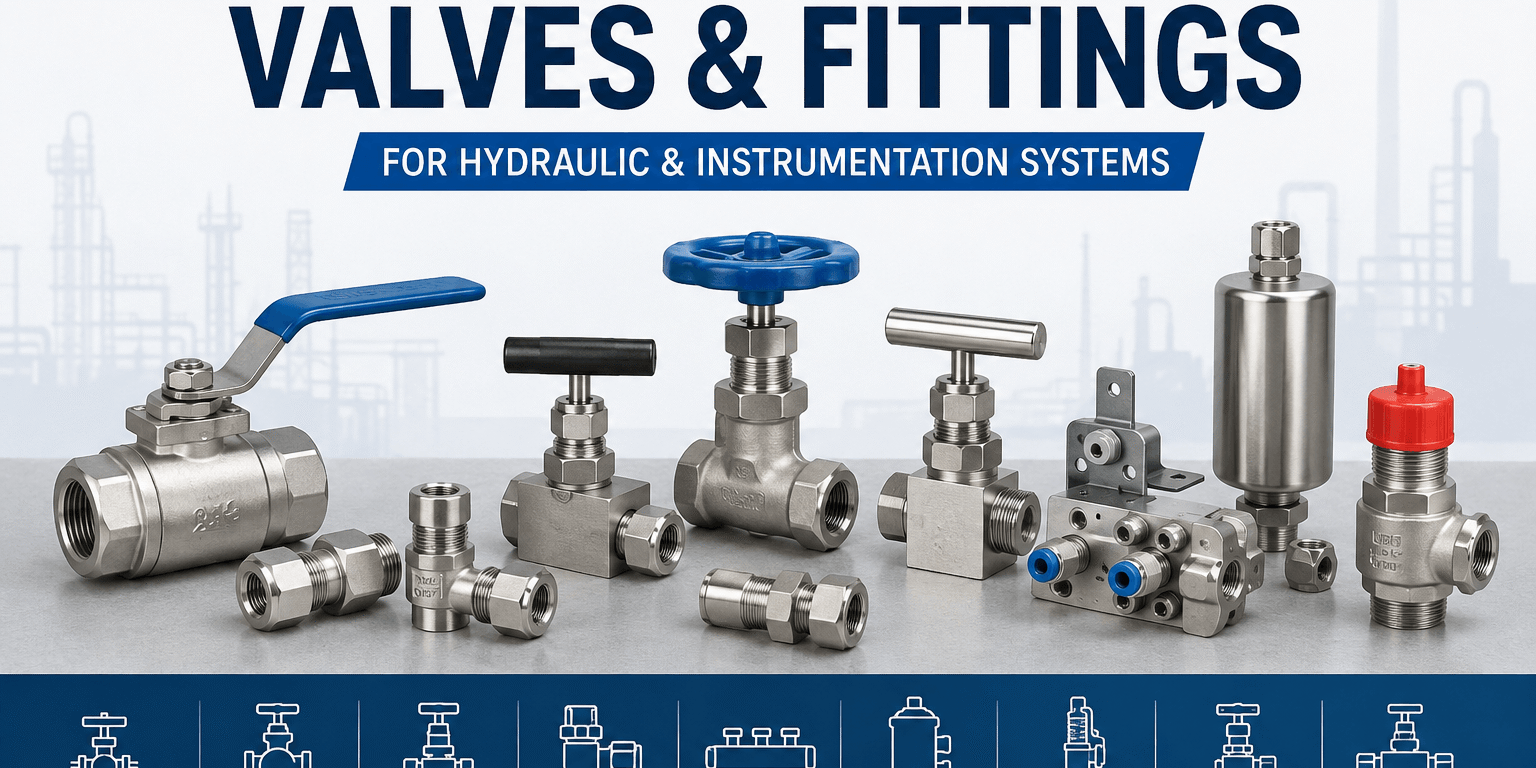
From hydraulic ball valves and flow control valves to tube fittings, needle valves, air headers, condensate pots, and double block and bleed valves, every component has a specific purpose. Understanding their functions makes it easier to select the right solution for different industrial applications.
What Are Valves and Fittings Used For?
Valves are primarily used to control, regulate, isolate, or direct fluid and gas flow. Fittings, on the other hand, connect tubes and piping while helping create a reliable and leak-resistant system.
In hydraulic and instrumentation applications, these components are commonly used in:
- Oil and gas systems
- Chemical processing plants
- Power generation
- Petrochemical industries
- Manufacturing facilities
- Hydraulic equipment
- Process control systems
- Instrumentation and measurement systems
The correct combination depends on factors such as operating pressure, temperature, fluid type, tube size, flow requirements, and installation conditions.
Understanding Hydraulic Valves
Hydraulic valves control the movement and pressure of hydraulic fluids within a system. They need to withstand demanding operating conditions while providing dependable control. When selecting valves, it is important to work with reliable hydraulic flow control valve manufacturers, hydraulic ball valve manufacturers, and hydraulic needle valve manufacturers that understand the pressure, flow, and application requirements of industrial systems.
Flow Control Valves
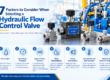
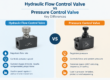
A flow control valve regulates the amount of fluid passing through a hydraulic circuit. By controlling flow rate, it can help manage actuator speed and improve the overall performance of hydraulic equipment. When choosing products from hydraulic flow control valve manufacturers, consider the required flow rate, operating pressure, fluid compatibility, connection type, and temperature range.
Hydraulic Ball Valves
A hydraulic ball valve uses a rotating ball with a passage through it to control fluid flow. It is commonly used when quick and reliable isolation is required. Choosing an experienced hydraulic ball valve manufacturer can help ensure the valve is suitable for the system’s pressure, temperature, material, and connection requirements.
These valves are particularly useful in applications where operators need to shut off a hydraulic line quickly. Their straightforward design also makes them practical for maintenance and system isolation.
Hydraulic Needle Valves
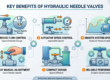
A hydraulic needle valve provides more precise flow adjustment than a simple isolation valve. Its design allows the operator to gradually regulate fluid flow, making it suitable for applications where controlled adjustment is important. Hydraulic needle valve manufacturers typically offer different configurations and specifications to meet varying pressure, flow, and installation requirements.
Tube Fittings: An Important Part of Hydraulic Systems
A valve cannot perform effectively if the connections around it are unreliable. Tube fittings provide secure connections between tubes, valves, instruments, and other components.
Compression Tube Fittings
Compression tube fittings create a mechanical connection between tubing and the fitting body. They are useful where a dependable tube connection is required without welding. A reliable compression tube fitting manufacturer can provide fittings designed for different tube sizes, materials, and pressure requirements.
When choosing compression fittings, pay attention to tube material, outside diameter, pressure rating, temperature, and compatibility with the working medium.
Hydraulic Tube Fittings
Hydraulic tube fittings are designed for connecting tubing and components in hydraulic circuits. A trusted hydraulic tube fitting supplier can offer fittings suitable for demanding hydraulic applications, where they must handle high pressure and mechanical stress.
The correct fitting can help minimize leakage and maintain consistent system performance. Selection should be based on tube dimensions, connection configuration, pressure rating, material, and application requirements.
Instrument Valves
Instrumentation systems often require accurate control and isolation of fluids or gases connected to pressure, temperature, and other measuring instruments.
Instrument Needle Valves
An instrument needle valve is designed for precise flow control and isolation in instrumentation systems. Instrument needle valve manufacturers and suppliers provide these valves in different materials, sizes, pressure ratings, and connection configurations to suit various industrial applications.
Their fine adjustment capability makes them useful where controlled flow or pressure is required around measurement instruments. These valves are commonly considered for applications involving gauges, transmitters, process instruments, and sampling systems.
Important Instrumentation Accessories
Valves and fittings are only part of a complete instrumentation installation. Several accessories help improve reliability, maintenance, and safe operation.
Air Headers
An air header distributes compressed air from a main supply to multiple instrument air connections. An experienced air header manufacturer can provide solutions designed for different outlet requirements, pressure levels, materials, and installation conditions.
A suitable air header should be selected according to the number of outlets, pressure requirements, material, connection size, and installation environment.
Condensate Pots
Condensate pots are used in steam and process measurement applications to collect condensate and help protect connected instrumentation. Condensate pot manufacturers offer different designs to suit differential pressure measurement and other process applications where proper condensate management is necessary.
Correct installation and sizing are important for maintaining reliable measurement performance.
Pressure Relief Valves
A pressure relief valve is a safety component designed to help protect equipment and piping from excessive pressure. When pressure reaches a predetermined level, the valve provides a controlled route for relieving pressure. Reliable pressure safety valve suppliers can provide valves based on specific pressure, temperature, material, and connection requirements.
The correct pressure setting, material, connection size, temperature range, and pressure rating should be considered before selecting a pressure relief valve.
Double Block and Bleed Valves
Double block and bleed valves combine two isolation barriers with a bleed arrangement in a single valve assembly. This configuration can provide effective isolation while allowing trapped pressure or fluid between the barriers to be released.
These valves are useful in applications where maintenance, testing, or equipment isolation requires additional control over the process line.
How to Choose the Right Valve or Fitting
Choosing industrial valves and fittings should not be based on size alone. A few important factors should always be evaluated.
1. Operating Pressure
Determine the maximum pressure the component will experience. The selected valve or fitting should have an appropriate pressure rating for the application.
2. Temperature
Temperature can affect the performance and material compatibility of valves, seals, and fittings. Always check the operating and design temperature before making a selection.
3. Fluid or Gas Compatibility
The material should be compatible with the fluid or gas being handled. Corrosive, aggressive, or high-temperature media may require specialized materials.
4. Connection Type and Size
Tube and pipe dimensions must match the selected fitting or valve connection. An incorrect connection can result in leakage or installation problems.
5. Flow Requirements
Consider whether the component needs to provide simple isolation, precise flow adjustment, pressure control, or a combination of functions.
6. Installation Environment
Outdoor installations, chemical facilities, high-temperature areas, and corrosive environments may require different material and surface-finish considerations.
7. Maintenance Requirements
For systems that require frequent inspection or servicing, components should be selected with accessibility and maintenance requirements in mind.
Why Material Selection Matters
Material selection has a direct impact on component durability and service life. Stainless steel is widely used in many industrial valve and instrumentation applications because of its strength and resistance to corrosion.
However, the best material depends on the operating conditions. Factors such as fluid composition, pressure, temperature, environmental exposure, and required service life should all be evaluated before final selection.
Valves and Fittings Must Work as a System
One common mistake is selecting individual components without considering how they will work together. A high-quality valve connected to an unsuitable fitting may still create a weak point in the system.
For example, a hydraulic circuit may require a combination of a flow control valve, hydraulic ball valve, hydraulic needle valve, and suitable hydraulic tube fittings. Similarly, an instrumentation installation may combine an instrument needle valve with an air header, condensate pot, pressure relief valve, or double block and bleed valve depending on the application.
Thinking about the complete system rather than individual components helps create a more reliable installation.
Benefits of Using the Right Components
Proper valve and fitting selection can provide several advantages:
- Better flow control
- Improved pressure management
- Reduced risk of leakage
- Easier maintenance
- Improved equipment protection
- Greater system reliability
- Longer component service life
- Safer industrial operation
The right components can also reduce the possibility of unexpected downtime caused by connection failures or unsuitable valve performance.
Final Considerations Before Selection
Before purchasing valves, fittings, or instrumentation accessories, prepare the basic specifications of your application. These should include:
- Fluid or gas being handled
- Operating and maximum pressure
- Operating temperature
- Required flow rate
- Tube or pipe size
- Connection type
- Material requirements
- Installation environment
- Required control or isolation function
- Applicable industry or project standards
Providing these details to a qualified manufacturer or supplier can make the selection process much easier and reduce the possibility of choosing an unsuitable component.
Conclusion
Valves and fittings are essential building blocks of hydraulic and instrumentation systems. From flow control valves and hydraulic ball valves to hydraulic needle valves, compression tube fittings, hydraulic tube fittings, and instrument needle valves, each component serves a specific purpose.
Instrumentation accessories such as air headers, condensate pots, pressure relief valves, and double block and bleed valves further support safe and efficient system operation. The key is to select every component according to the actual pressure, temperature, fluid, connection, and application requirements.
With the right combination of components, industrial systems can achieve better control, dependable connections, easier maintenance, and long-term operational reliability. Ped Lock Valves provides a range of valves, fittings, and instrumentation components designed to meet the varied requirements of hydraulic and industrial applications, with products supplied across Andhra Pradesh, Assam, Bihar, Chhattisgarh, Delhi, Goa, Gujarat, Haryana, Himachal Pradesh, Jammu and Kashmir, Jharkhand, Karnataka, Kerala, Madhya Pradesh, Maharashtra, Odisha, Punjab, Rajasthan, Tamil Nadu, Telangana, Uttar Pradesh, Uttarakhand, and West Bengal.