

Choosing the right hydraulic flow control valve can make a noticeable difference in the performance, efficiency, and reliability of a hydraulic system. The valve controls the rate at which hydraulic fluid moves through the system, helping regulate actuator speed and maintain smooth machine operation.
With different valve designs, sizes, materials, and flow capacities available, selecting the right option requires more than simply matching the connection size. The valve should suit the working conditions, pressure requirements, fluid type, and specific application.
Important Factors for Hydraulic Flow Control
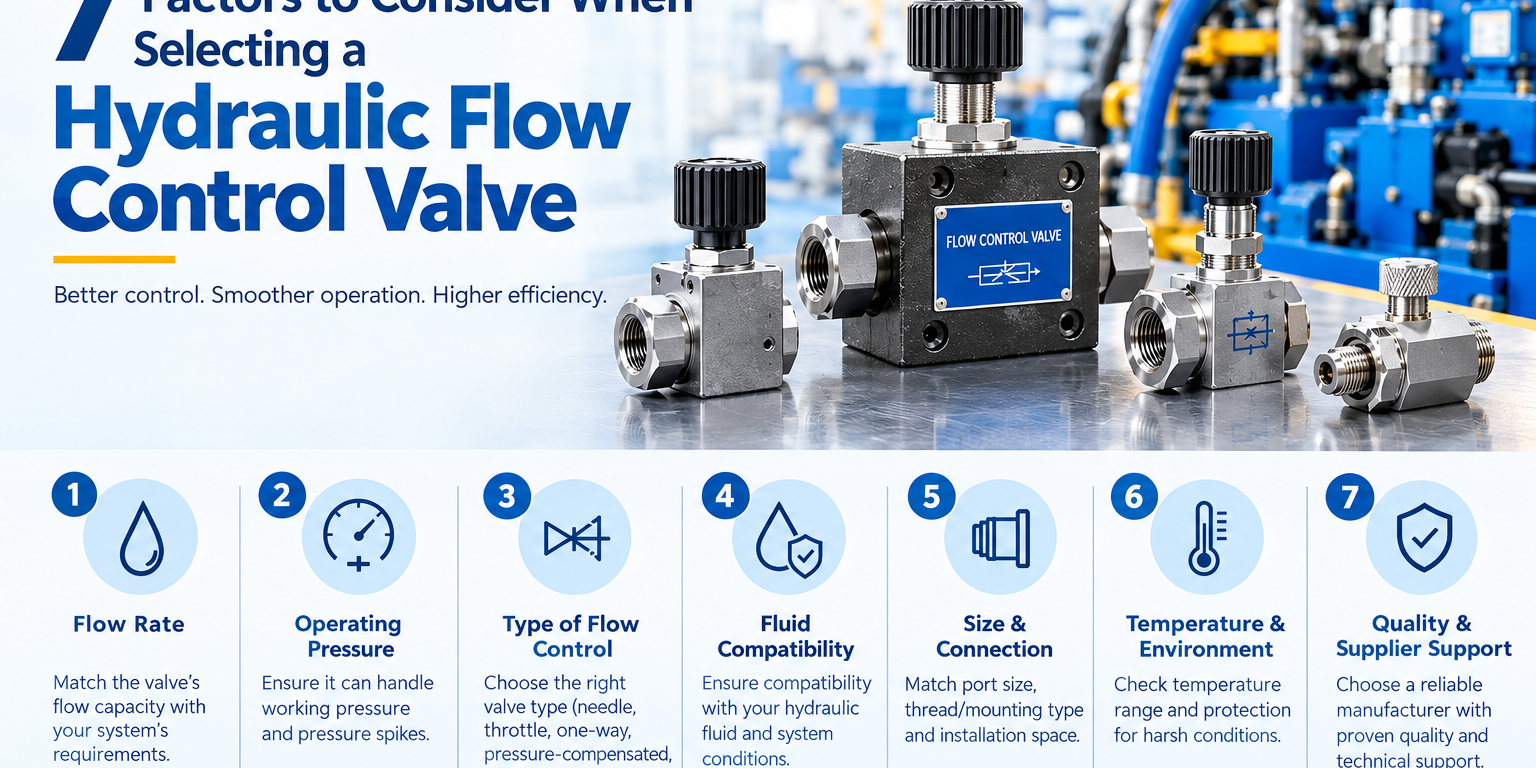
Required Flow Rate
Flow rate is one of the first things to check when selecting a valve. It determines how quickly hydraulic fluid can pass through the valve and directly affects the operating speed of hydraulic cylinders and motors.
A valve with insufficient flow capacity can restrict the system and reduce performance. On the other hand, choosing a valve that is much larger than necessary may increase cost without providing a practical benefit.
Check the system’s minimum and maximum flow requirements and select a valve that can handle the expected operating range comfortably.
Operating Pressure
Every hydraulic system operates within a specific pressure range, so the valve must be capable of handling the system’s working pressure safely.
Consider both normal operating pressure and possible pressure spikes. Selecting a valve with an appropriate pressure rating helps prevent premature wear, leakage, and performance problems.
It is also important to check the pressure drop across the valve. Excessive pressure loss can reduce overall system efficiency and may generate unwanted heat.
Type of Flow Control Required
Different applications require different methods of controlling hydraulic flow. A simple system may only need basic flow adjustment, while more demanding equipment may require precise and consistent control.
Common options include:
- Needle-type flow control valves
- Throttle valves
- One-way flow control valves
- Pressure-compensated flow control valves
- Adjustable flow control valves
Think about whether the flow needs to be controlled in one direction or both directions. If consistent flow is important even when system pressure changes, a pressure-compensated design may be more suitable.
Hydraulic Fluid Compatibility
The hydraulic fluid used in the system can influence valve selection. Hydraulic oils differ in viscosity, additives, operating temperature, and other characteristics.
The valve’s seals, internal components, and body materials should be compatible with the selected fluid. Using an incompatible combination can lead to seal deterioration, leakage, corrosion, or reduced valve life.
Always check the manufacturer’s recommendations for approved hydraulic fluids and operating conditions before installation.
Valve Size and Connection Type
Correct sizing is essential for reliable installation and efficient operation. The valve should match the required flow capacity while also fitting the hydraulic lines and available installation space.
Pay attention to:
- Port size
- Thread or mounting configuration
- Pipe or hose connection
- Overall valve dimensions
- Available installation space
A valve that meets the flow and pressure requirements but does not match the existing connection arrangement can create unnecessary installation work.
Operating Temperature and Environment
Hydraulic equipment can operate in demanding environments where temperature, dust, moisture, vibration, and contamination may affect component performance.
Check the valve’s permitted operating temperature range and ensure its materials and seals are appropriate for the environment. For outdoor or harsh industrial applications, additional protection may be necessary.
Temperature is particularly important because changes in hydraulic fluid viscosity can affect flow characteristics and valve response.
Quality, Reliability, and Supplier Support
The technical specifications are important, but the quality and reliability of the valve should also be considered. A well-made valve can provide consistent performance and reduce maintenance requirements over its service life.
When comparing hydraulic flow control valve manufacturers, look at their manufacturing capabilities, quality standards, product range, testing practices, and experience with industrial applications.
It is equally important to choose a reliable hydraulic flow control valve manufacturer that can provide accurate technical information and support when you need help with selection or installation.
For regular procurement, working with an experienced hydraulic flow control valve supplier can also help you maintain consistent product quality and availability.
Why Proper Valve Selection Matters
A flow control valve may be a relatively small component, but it can have a significant effect on the performance of an entire hydraulic system. The wrong valve can restrict flow, cause unstable actuator movement, increase heat, lead to leakage, or waste energy.
Taking time to evaluate flow rate, pressure, valve type, fluid compatibility, size, operating environment, and supplier reliability can help you avoid these issues.
Conclusion
Selecting the right hydraulic flow control valve involves more than choosing a valve based on size or price. Understanding your system’s flow requirements, pressure range, fluid, operating environment, and control needs can help you select a valve that delivers reliable and efficient performance.
By considering these factors and choosing products from an experienced manufacturer or supplier, you can reduce maintenance concerns, improve system efficiency, and support dependable long-term operation.
Ped Lock Valves offers valve solutions for industrial applications and supports customers across key locations in Gujarat, including Ankleshwar, Vadodara, Bharuch, Surat, and Vapi. Before selecting a valve, it is advisable to discuss your application, process conditions, and technical requirements with the team to identify a suitable solution for your hydraulic system.