

Hydraulic systems rely on controlled fluid movement to generate the required force and motion. While several types of hydraulic valves work together within a system, flow control valves and pressure control valves have different responsibilities. Understanding this difference is important when designing, maintaining, or upgrading hydraulic equipment.
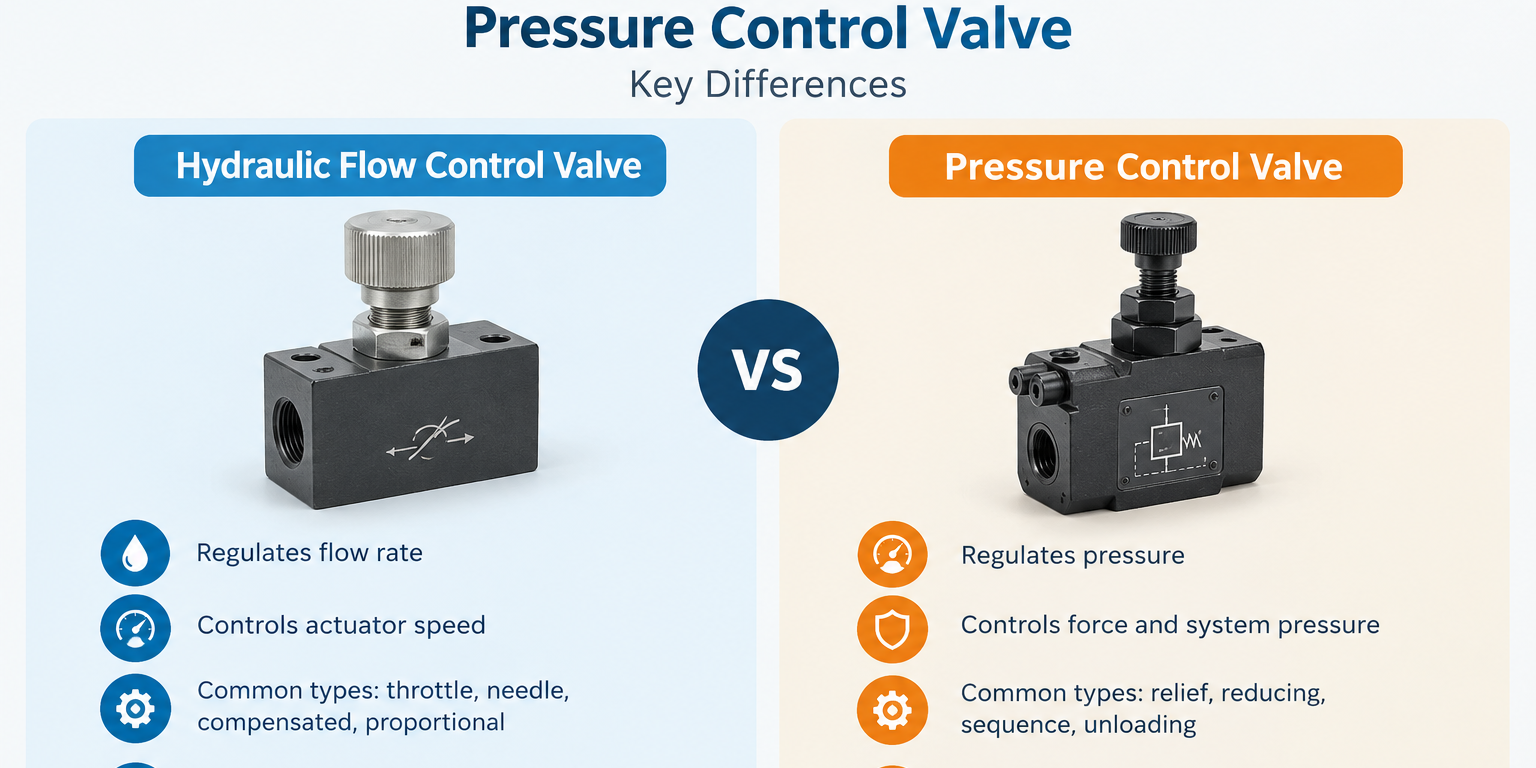
A hydraulic flow control valve primarily regulates the rate at which hydraulic fluid moves through a circuit, which directly influences actuator speed. A pressure control valve, on the other hand, manages hydraulic pressure to maintain operating conditions and help protect components from excessive pressure.
Although both valves are used for controlling hydraulic systems, they should not be considered interchangeable. Choosing the appropriate valve depends on what the application needs to control: fluid speed and volume or system pressure and force.
What Is a Hydraulic Flow Control Valve?
A hydraulic flow control valve is designed to regulate the amount of hydraulic fluid passing through a particular section of a circuit. By adjusting the available flow area, the valve can increase or decrease the flow rate.
Since actuator speed is closely related to flow rate, controlling the flow allows operators and system designers to manage how quickly a hydraulic cylinder or motor moves.
For example, if a hydraulic cylinder is extending too quickly during a machine cycle, restricting the flow can reduce its movement speed. Similarly, increasing the available flow can allow the actuator to move faster when the system permits it.
Common Types of Flow Control Valves
Depending on the application, flow control can be achieved using different valve arrangements, including:
- Throttle or needle-type flow controls
- Adjustable flow control valves
- Pressure-compensated flow control valves
- Proportional flow control valves
Pressure-compensated designs can help maintain a more consistent flow when pressure conditions across the valve change. This can be particularly useful when consistent actuator speed is important.
Read More: Hydraulic Flow Control Valve Manufacturer for Precision and Performance
What Is a Pressure Control Valve?
A pressure control valve is used to regulate, limit, or maintain pressure within a hydraulic circuit. Pressure is directly related to the force a hydraulic actuator can produce, so controlling pressure is essential for both machine operation and system protection.
Different pressure control valves perform different functions. Relief valves can limit maximum system pressure, reducing valves can maintain a lower pressure in a particular circuit section, and sequence valves can use pressure conditions to control the order of operations.
In simple terms, if flow control is mainly concerned with how fast an actuator moves, pressure control is mainly concerned with how much pressure the system develops or allows.
Hydraulic Flow Control Valve vs Pressure Control Valve
The easiest way to understand the difference is to look at what each valve is designed to regulate.
|
Feature |
Hydraulic Flow Control Valve |
Pressure Control Valve |
| Primary purpose | Controls fluid flow rate | Controls hydraulic pressure |
| Main effect | Influences actuator speed | Influences force and pressure conditions |
| Main parameter | Flow rate | Pressure |
| Typical applications | Speed regulation and controlled movement | Pressure limitation, reduction, sequencing and protection |
| Common examples | Throttle, needle and compensated flow controls | Relief, reducing, sequence and unloading valves |
| Main selection concern | Required flow and speed | Required pressure and circuit function |
Both valve categories can influence overall system performance, but they do so through different control variables.
How Does a Hydraulic Flow Control Valve Work?
A flow control valve works by changing the effective opening through which hydraulic fluid passes. A smaller opening restricts the flow, while a larger opening permits more fluid to pass.
Consider a hydraulic cylinder used for material handling. If the cylinder needs to move slowly while positioning a load, the flow can be restricted to reduce actuator speed. Once the positioning operation is complete, the system may allow greater flow for faster movement.
However, flow control is not simply about restricting fluid. Valve selection, pressure drop, fluid temperature, viscosity, load changes, and circuit configuration can all influence actual flow performance. Pressure-compensated flow control can be useful where pressure variations would otherwise cause changes in flow rate.
How Does a Pressure Control Valve Work?
Pressure control valves respond to pressure conditions within the hydraulic circuit. Depending on the valve type, the valve may open, close, or adjust its position when a predetermined pressure condition is reached.
For instance, a pressure relief valve can prevent system pressure from exceeding its specified setting by directing excess fluid away from the pressure-producing section of the circuit. A pressure-reducing valve serves a different purpose by maintaining a lower pressure in a particular branch of the system.
This makes pressure control especially important in applications where hydraulic components must operate within defined pressure limits.
Why Is the Difference Important?
Using the wrong valve can result in poor machine performance, inconsistent operation, unnecessary energy losses, or inadequate system protection.
Imagine a machine where the main problem is excessive cylinder speed. Installing a pressure control valve simply because the machine is hydraulic may not address the actual requirement. The system needs appropriate flow regulation to influence actuator speed.
Similarly, if the problem is excessive system pressure, simply reducing flow is not a substitute for an appropriately selected pressure control device.
This is why engineers generally consider the required flow rate, operating pressure, actuator characteristics, load, temperature, and circuit configuration before selecting a valve.
Can Both Valves Be Used in the Same Hydraulic System?
Yes. In many hydraulic systems, flow and pressure control work together.
A machine may use a pressure relief valve to establish a maximum pressure limit while using flow control valves to regulate the movement speed of cylinders or motors. These functions complement each other rather than replacing one another.
For example, a hydraulic lifting machine may require:
- Pressure control to help keep the system within its intended pressure range.
- Flow control to regulate lifting and lowering speed.
- Directional control to determine whether the cylinder extends, retracts, or remains stationary.
Hydraulic systems commonly use these different valve functions together because pressure, flow, and direction each address a different aspect of actuator operation.
Key Factors When Selecting a Hydraulic Control Valve
Choosing a valve should involve more than simply checking its size. Consider the following factors:
Required Flow Rate
Determine the flow rate that the hydraulic circuit needs during normal operation. The selected valve should be suitable for the expected flow range.
Operating Pressure
Check the normal working pressure as well as the maximum pressure that the system may experience. The valve must be appropriately rated for the application.
Fluid Type and Temperature
Hydraulic oil characteristics and temperature can affect valve performance. Changes in fluid viscosity can influence flow behavior, particularly in flow-control applications.
Required Accuracy
Some applications only need basic flow adjustment, while others require precise and repeatable control. This can influence whether a conventional, compensated, or proportional valve is appropriate.
Installation and Connection Requirements
Port size, mounting arrangement, connection type, available space, and circuit configuration should all be checked before final selection.
Application Requirements
The valve should be selected according to what the machine actually needs to control. A reliable hydraulic valve supplier should be able to evaluate the operating conditions and recommend a suitable configuration rather than focusing on the valve name alone.
Choosing the Right Hydraulic Valve Supplier
When sourcing hydraulic valves, it is useful to work with experienced hydraulic flow control valve manufacturers that understand different industrial applications and operating requirements.
A dependable hydraulic flow control valve manufacturer should provide appropriate technical information, pressure and flow ratings, material details, installation guidance, and product support.
It is also important to consider consistency in manufacturing quality and after-sales technical assistance when selecting a hydraulic flow control valve supplier. The right supplier can help ensure that the selected valve matches the hydraulic circuit rather than simply supplying a component based on size or appearance.
Why Proper Valve Selection Matters
A hydraulic valve is one part of a larger system. Even a well-designed valve may not perform as expected if it is incorrectly sized or installed in an unsuitable circuit.
Proper selection helps achieve predictable actuator movement, appropriate pressure management, improved equipment reliability, and smoother machine operation. It can also make troubleshooting easier because each valve performs a clearly defined function.
Ped Lock valves focuses on hydraulic valve solutions designed around the functional requirements of industrial hydraulic systems, helping users consider factors such as pressure, flow, application, and operating conditions during valve selection.
Conclusion
A hydraulic flow control valve and a pressure control valve may both be used to manage hydraulic systems, but their primary functions are different. Flow control valves regulate the rate of fluid movement and are commonly used to influence actuator speed. Pressure control valves regulate or limit pressure and are important for controlling force, maintaining circuit conditions, and protecting equipment.
Understanding these differences makes it easier to identify the right valve for a particular application. Before purchasing, consider the required flow rate, operating pressure, temperature, actuator requirements, installation conditions, and overall hydraulic circuit.
For industrial applications, Ped Lock valves can be considered when evaluating hydraulic valve solutions based on the specific requirements of the system.